









Home Safety
SAFETY BROCHURE

1. ELECTRICAL FIRES SAFETY

What is fire? 

Fire is a rapid chemical reaction or a series of reaction that produces heat and/or light. Occurs where there is oxygen, heat, fuel and a chemical chain reaction.

Sources of fire 

Generally are 5: these are: People (arson, jealous intimidation, juvenile delinquency, insanity, sabotage, riots, radical terrorism etc); Friction (resistance to relative motion between two bodies in contact produce heat and sparks); Chemicals (e.g. if water is poured rapidly onto sulphuric acid fire occurs); Electricity (direct heating, arcing and shot circuiting, older wiring installation etc) and Spontaneous fires (fire that starts itself e.g. in dumps, at piles of hay and grain, etc).

Fires due to electricity in buildings 

The major cause of fire in buildings is arcing or sparking due to loose connection. Loose connections are mainly found in switches and sockets. The other cause is overheating of electrical equipment (cables and heating appliances). This is attributed with wrong use of cable sizes during installation, overloading of sockets, wrong use of fuse sizes and under sizing of the main switch.

Fires due to Tanesco distribution lines in buildings  

Common causes are: over voltage supply (normally affect many consumers connected to the same low voltage (LV) distribution mains) and short circuiting of distribution wires and/or lead-in-wires (these types of fires rarely happen since in most cases sparks produced during a short circuit hardly found no fuel to burn, so the sparks decays without causing spread of fire).

How to avoid fires due to electricity in buildings 

  • Employ authorised/licensed electrical installation contractors during wiring installation your building
  • Inspect/check wiring installations in your building every five (5) years using licensed contractor
  • Secure any loose connection whenever happens
  • Avoid overloading your sockets by plugging many appliances at one socket
  • Extension cables are for temporary use only. Avoid permanent use of them.
  • Use extension cords that are the correct size or rating for the equipment in use
  • Do not extend electrical wiring to the front house or chicken hut without using licensed contractor.
  • Test electrical protection devices e.g. residual current device (RCD) by pressing the testing button at least once in a month

How to avoid fires due to Tanesco distribution lines in buildings

  •  Report immediately to your nearest Tanesco office any abnormality observed in the distribution lines

Preparedness and response of fire cases in buildings

  • Install/use smoke and/or heat detectors in every room of your building for early detection of fires
  • Posses fire blanket(s) at your home to fight fires. Recommended to have at least one carbon dioxide or dry powder (ABC) extinguishers
  • Minimize number of furniture especially of sponge types to avoid a big fire load in your building
  • Have escape routes in extreme rooms especially one of bed rooms. Many fires start at kitchen and sitting room.         

2.       ELECTRICAL TRANSMISSION AND DISTRIBUTION LINES ACCIDENTS

 What are transmission lines? 

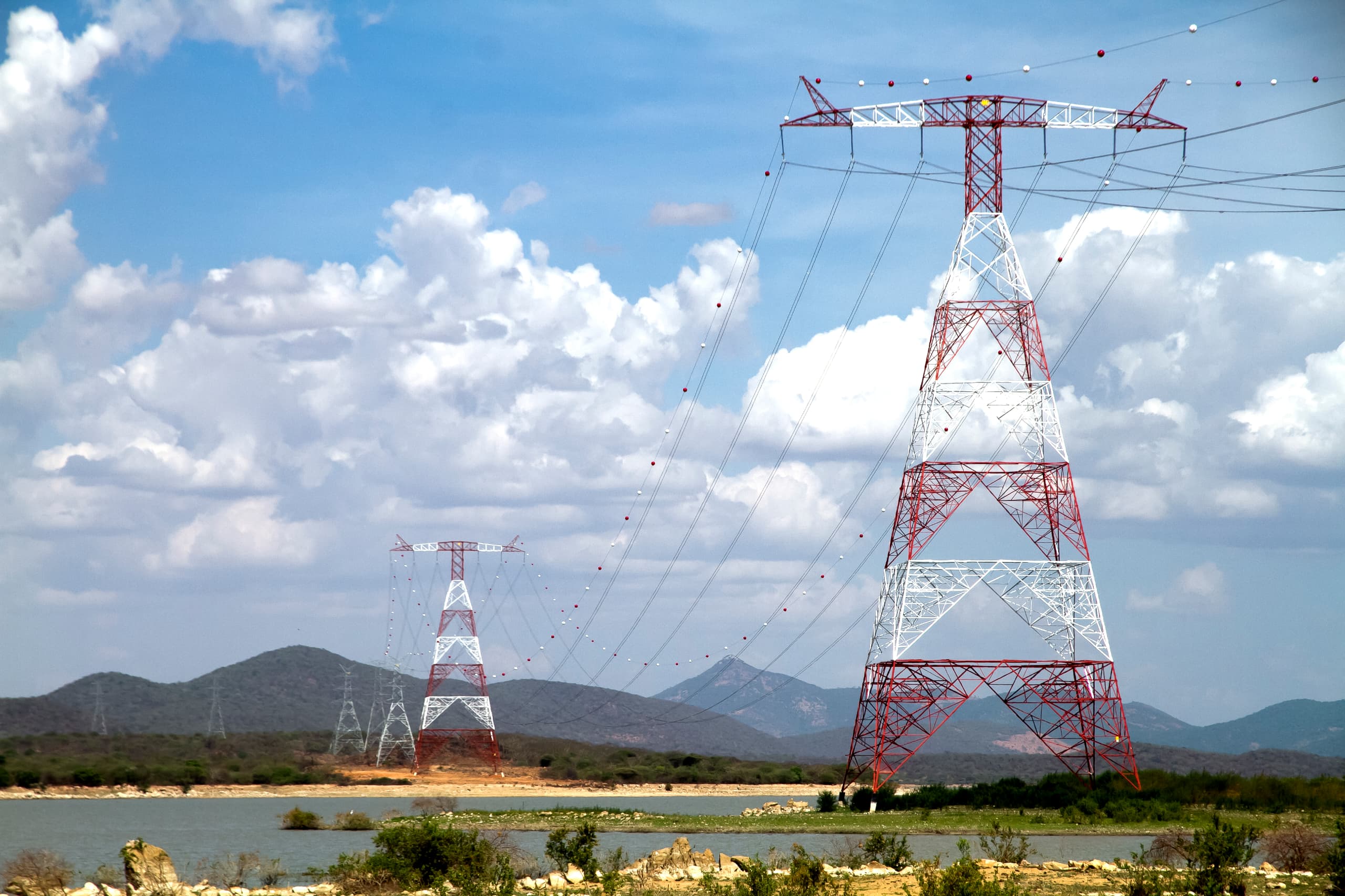
Transmission lines are extra high voltage lines transmitting electricity from generating station to consumers via grid substations. In Tanesco transmission lines are of 66,000 Voltage (66 kV), 132,000 voltage (132 kV) and 220,000 Voltage (220 kV) lines. 

Sources of accidents occurring in electricity  transmission lines

  • Carrying out activities under the lines. E.g. farming, cattle grazing, playing, etc.
  • Building closer or under the lines
  • Vandalism. E.g. of members of transmitting steel towers, conductors (cables)
  • Bush fires

Type of accidents occurring in transmission lines 

  • Electrocution of people and other living creatures
  • Fires
  • Hit by falling steel towers, conductors, etc
  • Social and economic accidents. E.g. blackouts, loss of revenue to Tanesco and the nation

How to avoid accidents occurring in transmission lines 

  • Do not do any activity under transmission lines. You are endangering your life.
  • Do not build closer or under transmission lines
  • Stop vandalism of electrical equipment in transmission lines.
  • Do not set bush fires.
  • Objects touched by a fallen wire e.g. fences, buildings or even surrounding ground must be considered energized and should not be touched.
  • Stay away from towers and lines during extreme windstorms, heavy rains, thunderstorms or other extreme conditions.    

What are distribution lines 

Distribution lines are medium high and low voltage lines distributing electricity to consumers through distribution substations. In Tanesco distribution lines are of 33,000 Voltage (33 kV), 11,000 voltage (11 kV) and 400 Voltage (0.4 kV) lines.

Sources of accidents occurring in electricity  distribution lines 

  • Activities under the lines. E.g. farming, cattle grazing, playing, bar sits placed under distribution lines, etc.
  • Acivities under or near distribution transformers e.g. selling of clothes (mitumba) below pole mounted transformers, activities touching the fence of ground mounted transformers.
  • Building closer or under the lines
  • Vandalism. E.g. of  transformer oil, conductors (cables),
  • Bush fires
  • Acts of children e.g. using catapults, climbing poles
  • Tree cutting closer or at lines
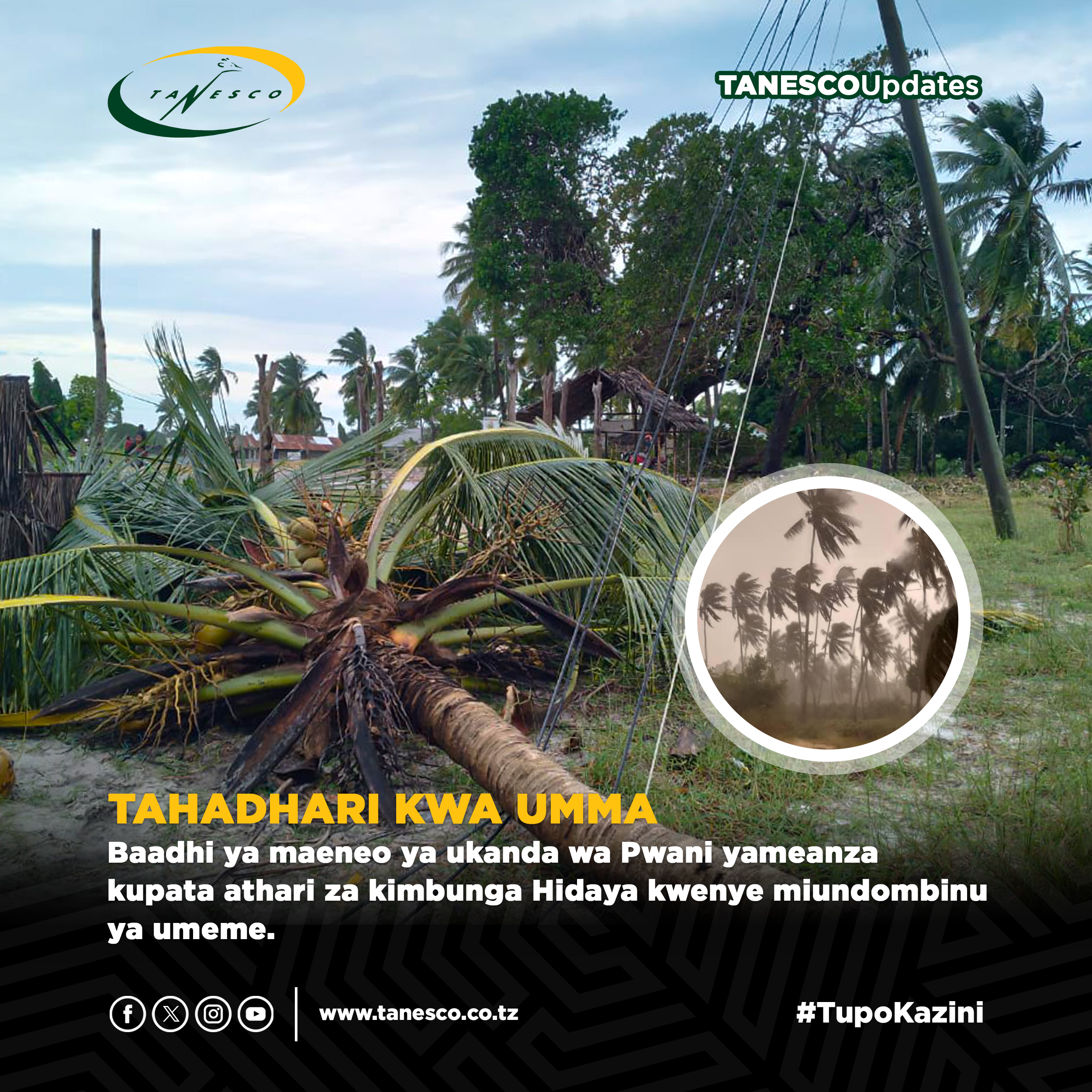
  • Touching fallen conductors
  • Carrying long objects in vehicles and passing under distribution lines
  • Fence electrification at home
  • Building illegal service lines and connections – VISHOKA
  • Power theft e.g. direct connection, meter bypassing and meter tempering.
  • Corruption and bribery activities

Type of accidents occurring in distribution lines

  • Electrocution cases
  • Damage of electrical appliances
  • Fires
  • Hit by falling poles, conductors, etc
  • Social and economic accidents. E.g. blackouts, loss of revenue to Tanesco, consumers and the nation

How to avoid accidents occurring in distribution lines

  • Do not use VISHOKA on any electrical work. Utilise your nearest TANESCO Office.
  • Do not sit or do any activity under distribution lines
  • Stop vandalism of electrical equipment in distribution lines.
  • Do not set bush fires.
  • Do not cut trees close to power lines
  • Do not carry long objects under power lines
  • Do not touch power lines that have fallen to the ground.
  • Check you children do not endanger their life by hitting birds on electric cables and climbing poles. 

If someone comes into contact with a live electrical source  - do not touch. 

  • Push him or her away using bad conductors of electricity e.g. a piece of dry wood. Be very careful as you could as well endanger your life.
  • Inform nearby TANESCO office for any electrical related accident, please inform the nearby TANESCO office.
  • Call for help to rush the victim to the hospital. 
 
E-BIZ SOLUTIONS LTD